Less repeat work. More revenue.

Halo Digital builds the software, AI integrations and agentic assistants that take routine work off your team, so their hours go into the work that grows the business.

Repeat manual work falls while revenue rises An illustrative chart over twelve months. One band of lines, repeat manual work, starts high and falls. The other, revenue, starts low and rises. They cross near the middle. Revenue Repeat manual work Today Month 6 Month 12
Illustrative model of an automation rollout, not client results. Run it with your own numbers.

Recent work, shown as it runs.

A clinic's records system, developer tools for Nigeria's national language model, and a walkable tour of a real apartment. The screens below are the products themselves.

Integrated Occupational Health Services, Port Harcourt

The medical records system a clinic runs on

IOHS examines workers for fitness to work. We built the system behind every visit: reception registers a client, nursing, laboratory and radiology record their findings in any order, and the doctor issues the decision. A Fit result produces a certificate an employer can verify by QR code.

  • Separate screens for reception, nursing, laboratory, radiology, doctors and administrators
  • A desktop app that keeps working when the connection drops, then syncs
  • An AI assistant that drafts the doctor's entries on the clinic's own computer. The doctor reviews and decides
  • A public website with online intake and certificate verification
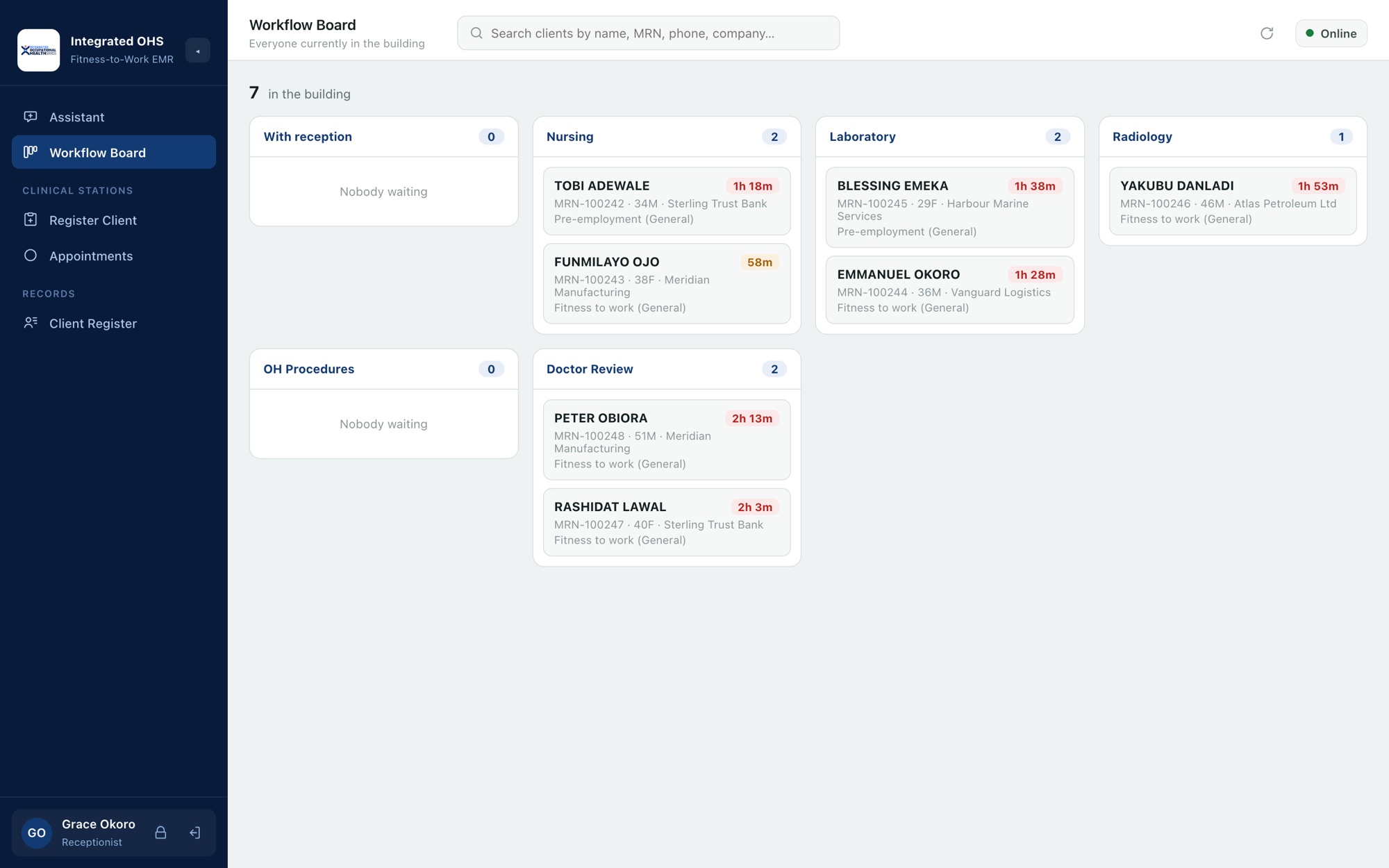
The EMR workflow board: seven demonstration clients shown as cards under reception, nursing, laboratory, radiology and doctor review
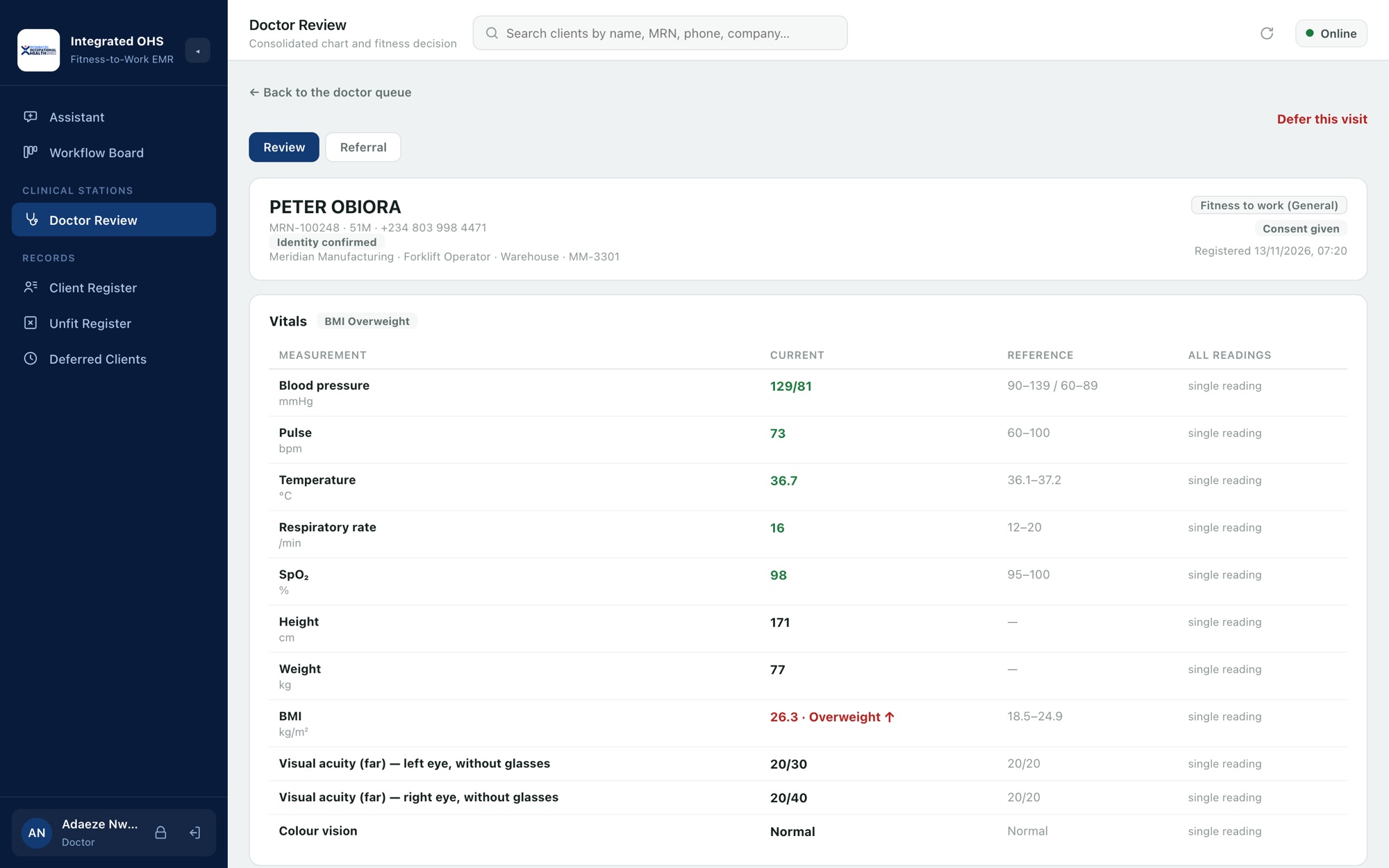
The doctor review screen: a demonstration client's vitals beside their reference ranges, with an out-of-range BMI marked in red

Screens from the EMR running on seeded demonstration records. No real client data is shown.

  1. ReceptionRegisters the client
  2. Nursing, laboratory, radiologyRecord findings in any order
  3. DoctorIssues the fitness decision
  4. CertificateVerified by QR code
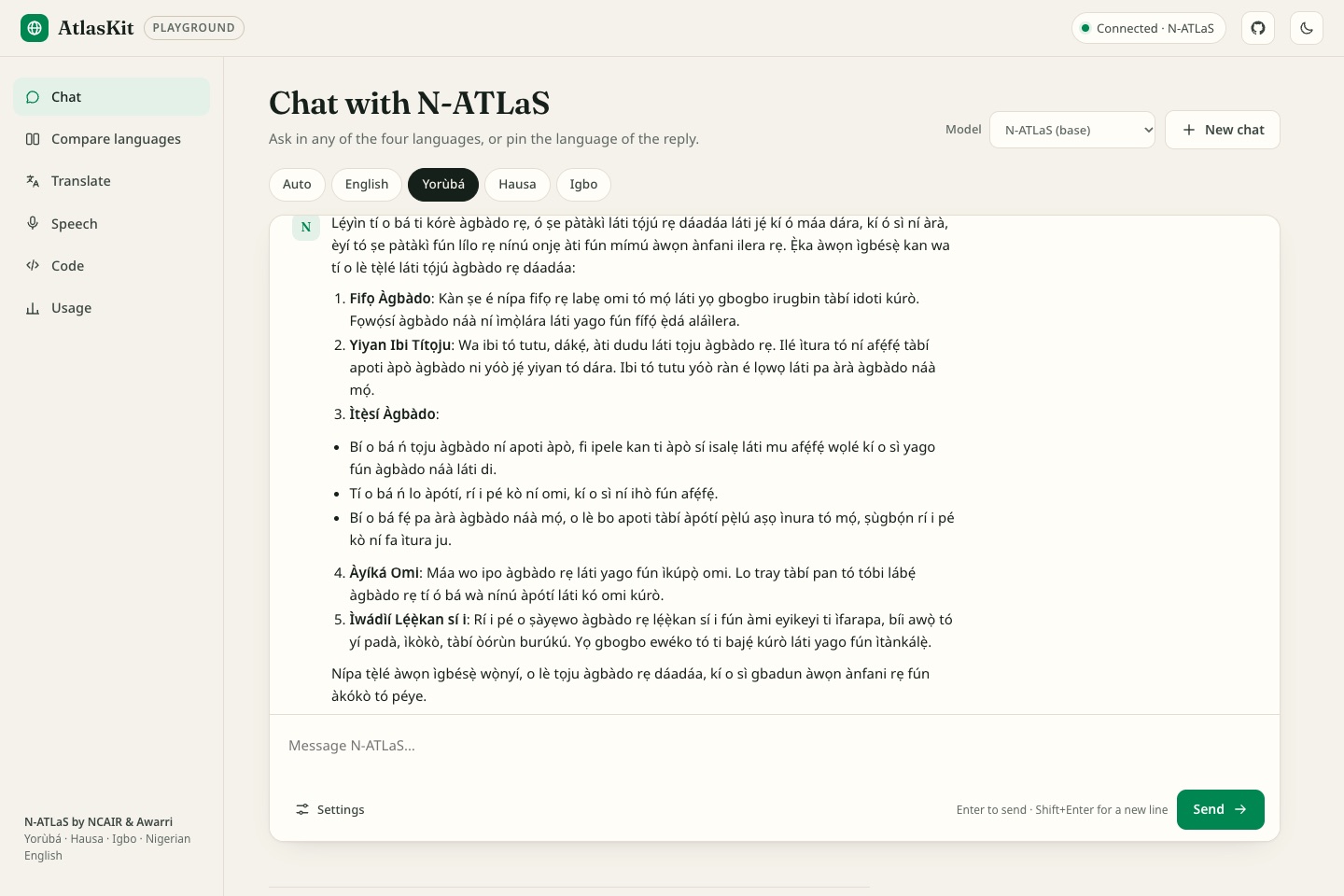
The AtlasKit playground answering a question in Yorùbá
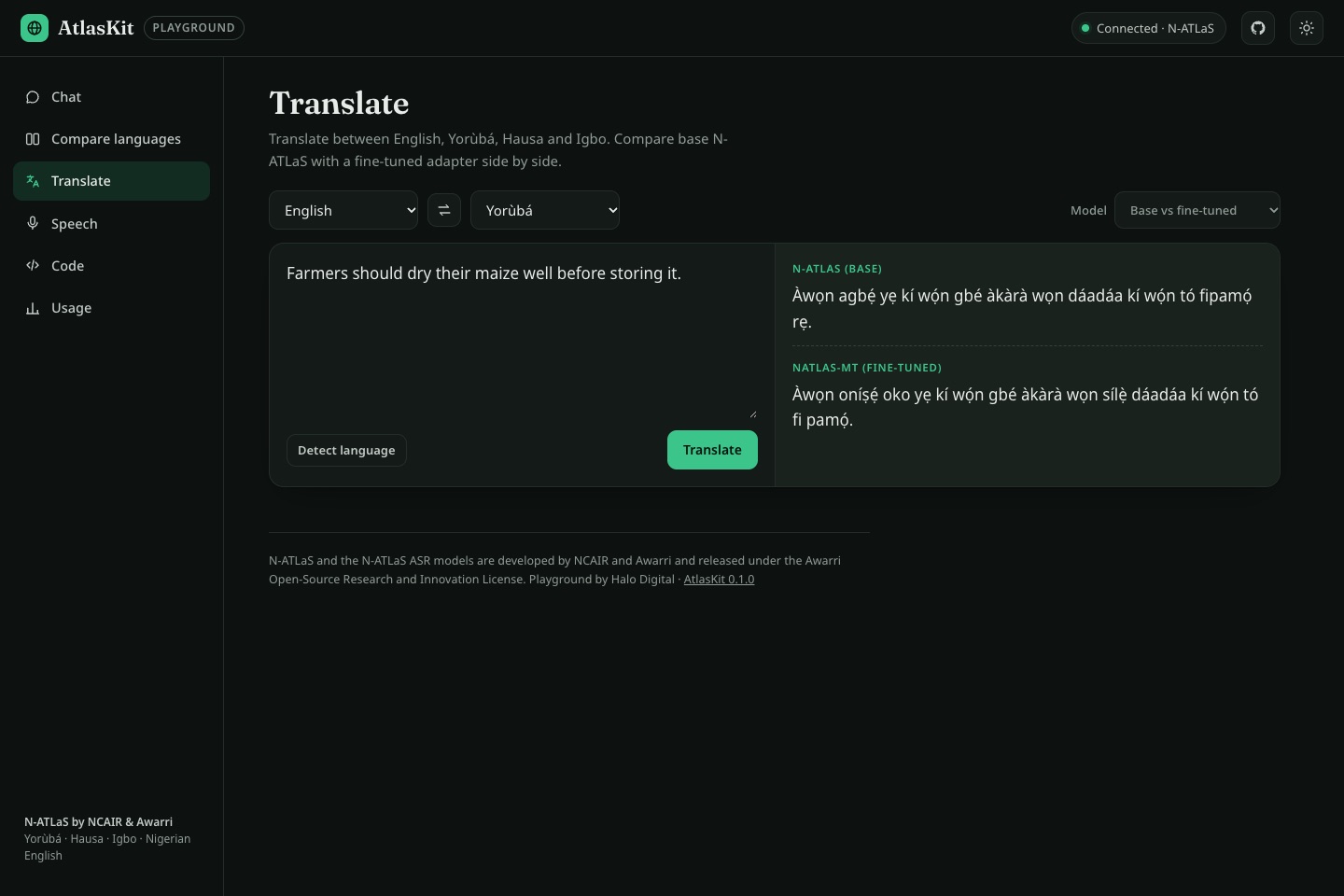
The AtlasKit playground translating English to Yorùbá with the base and fine-tuned models side by side

Built on NCAIR's N-ATLaS for the National AI Innovation Challenge 2026

AtlasKit: developer tools for Nigeria's national language model

N-ATLaS is the open-source multilingual model from NCAIR and Awarri. AtlasKit takes a developer from model weights on a download page to an app that answers in Yorùbá, Hausa, Igbo and Nigerian English.

Gateway
An API in the format developers already use, with speech transcription, translation and summaries
SDKs
Python and JavaScript clients with no dependencies
Playground
Chat, compare the four languages, translate, speak, copy the code
Fine-tuning and evaluation
Train an adapter, then score it against the base model on public benchmarks
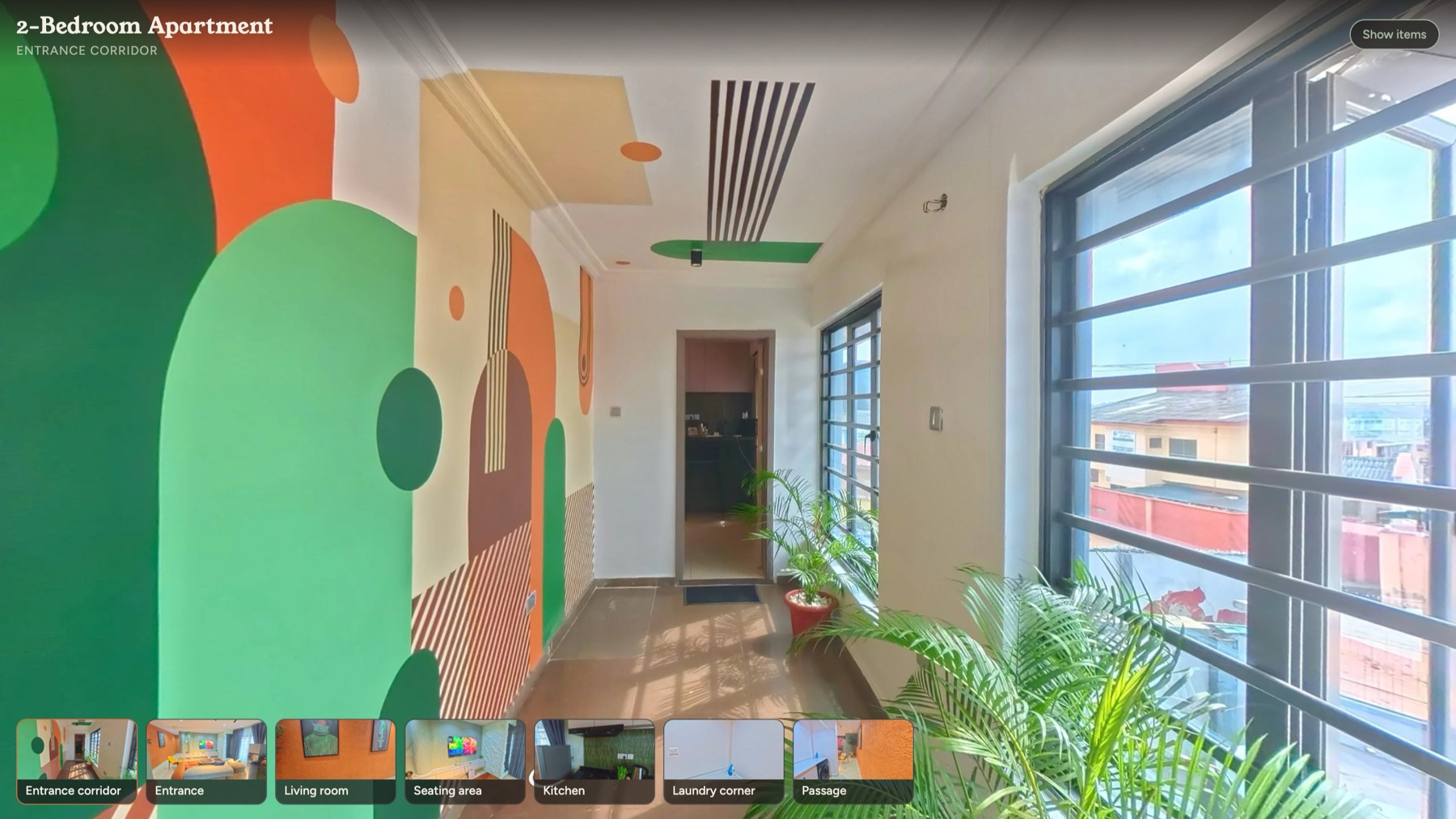
A frame from the browser tour: an apartment corridor with a painted mural, and a strip of rooms to jump to

A serviced-apartment operator in Ibadan

A walkable 3D tour, made from one 360 camera

We walked the apartment once with a consumer 360 camera, then reconstructed it as a tour that opens in any browser. Guests move from room to room and tap an item to see what is provided before they book.

This is one of the captured panoramas, live. Drag it.

Also in development at Halo

  • CardioAI

    Decision support for clinicians reading ECG tracings photographed on a phone.

  • UroFlow

    Acoustic uroflowmetry: estimating urinary flow from its sound, to help monitor prostate enlargement.

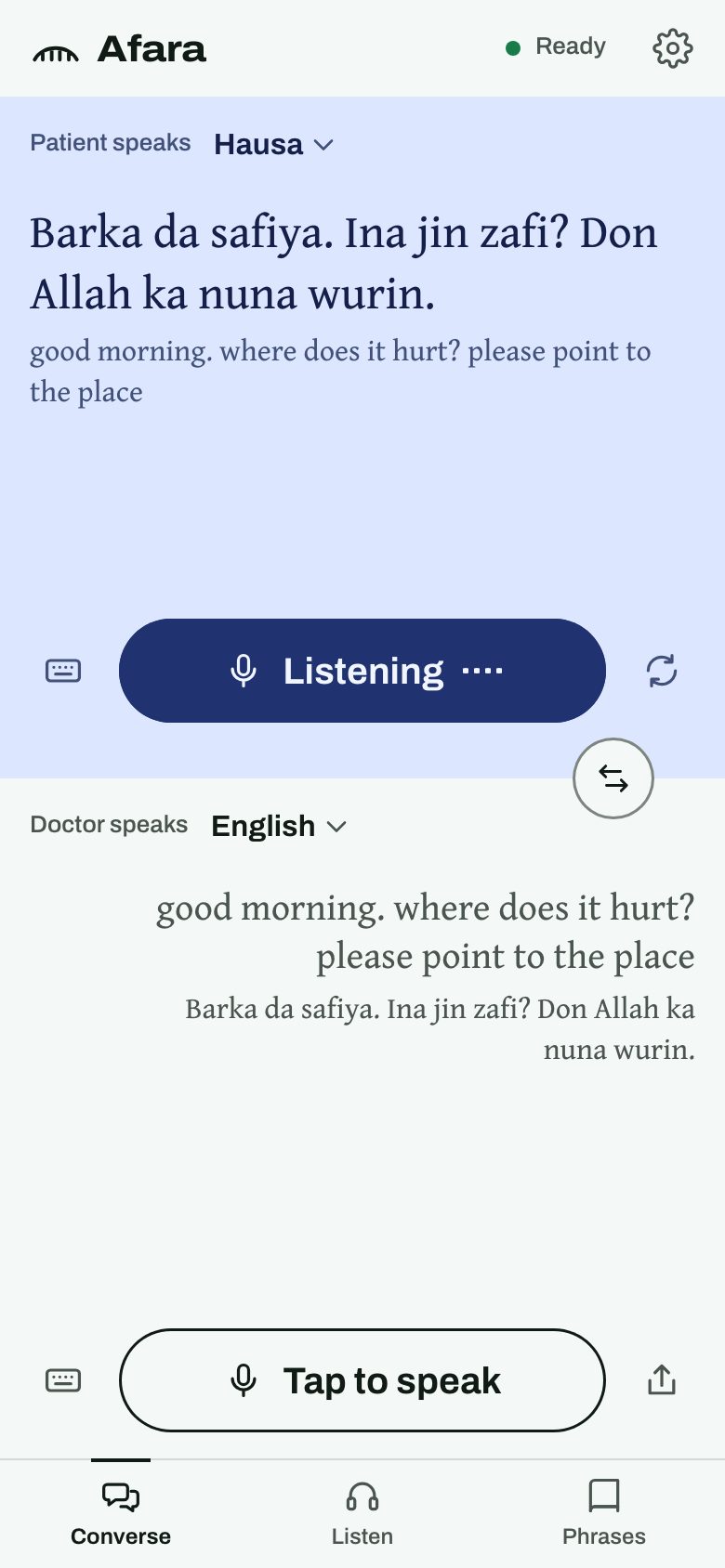
  • Afara interpreting between a Hausa-speaking patient and an English-speaking doctor

    Afara

    A live interpreter between Nigerian English, Yorùbá, Hausa and Igbo, built on open Nigerian-language models.

The ECG trace and waveform are drawings, not readings. Clinical tools support qualified professionals and do not replace clinical judgement.

What changes when the routine work runs itself

  1. First, your systems start talking

    Integrations pass information between the tools you already pay for. Nobody types the same record twice.

  2. Then AI works inside the workflow

    Documents, messages and reports arrive drafted, sorted and summarised before a person opens them.

  3. Then assistants carry whole routines

    Agentic assistants run a routine from start to finish and bring your team only the decisions.

Illustrative chart: over twelve months, hours of repeat work fall in three steps while revenue rises.
Illustrative model. The shape is typical of a staged rollout; the scale depends on your business, which is why this chart has no numbers. The estimator uses yours.

What we build

AI integrations
Models wired into the tools you already use, to draft, sort, summarise and forecast.
Agentic assistants
Assistants that carry a routine from start to finish and hand your team only the decisions.
Custom software
Applications shaped around how your team works, from clinic records to internal dashboards.
Workflow automation
Systems that pass information to each other, so nobody enters it twice.
Websites and 3D tours
Fast, accessible websites, and walkable tours of real spaces.

How an engagement runs

  1. Consultation. We look at the workflow, the tools and the goal, and choose a starting point worth solving.
  2. Scoped proposal. Deliverables, costs and a way to measure success. For AI work we test the approach on your data first.
  3. Build in stages. The people who will use the system shape it before launch.
  4. Handover. Deployment, documentation and training, with optional support afterwards.

Put your own numbers in

Move the sliders to match your team. The chart and totals are worked out from what you enter, in your browser.

12
8
₦3,500
40%

The automated share is your assumption. We test it against your real workflow during the consultation.

Hours returned to your team each month, once live
166
Value of time returned in the first year
₦5,532,800
Equal to this many full-time roles
1.0
Monthly hours of repeat work falling and cumulative value rising over twelve months, from your inputs.
An estimate from your inputs with a six-month rollout, not a quote or a promise.
Talk through these numbers

Questions owners ask first

Do we need to know exactly what we want?

No. Bring the slow process or the idea you keep coming back to. The consultation works out whether software, automation or AI would help, and what a sensible first step is.

Can you work with the tools we already have?

Often, yes. We review your software and data access before proposing changes. Where a tool cannot be integrated or needs replacing, we set out the options and costs first.

Does AI always mean an expensive subscription?

No. Some tasks suit a small model running on your own computers, as in the IOHS clinic. Others suit a hosted service. We compare setup, hardware and running costs before recommending either.

What does a project cost?

It depends on scope, integrations and scale. After the consultation you get a quote with clear deliverables, and we can scope a small first phase to prove the idea before a larger investment.

How do you handle business and patient data?

Before work starts we agree what data is needed, who can access it, where it is processed and how long it is kept. Please do not send patient records or sensitive data through this website.

Can we work together remotely?

Yes. We are based in Ibadan and work with teams across Nigeria and abroad, with agreed meeting times and milestones.

Tell us where the hours go

Describe the work that eats your team's week. We will reply to arrange a consultation and suggest a practical first step.

Next you choose email or WhatsApp to send it. Nothing is sent from this page. Read the privacy notice.